visitburgas.de
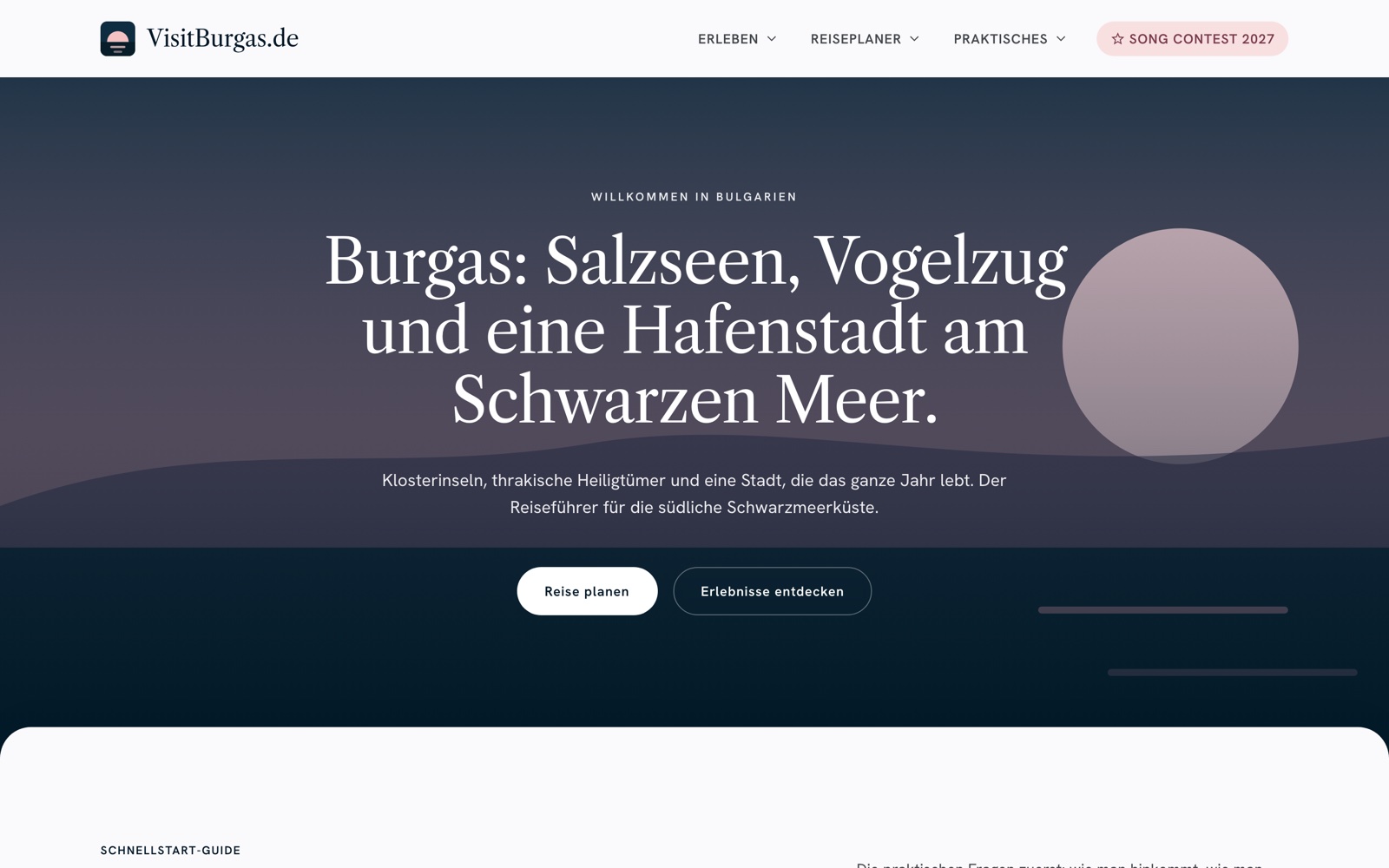
A German-language guide to Burgas and the southern Black Sea coast that sends visitors to the city, the salt lakes and the people who live there, rather than to the resort strip.
- Type
- Editorial guide
- Coverage
- Burgas and the southern Black Sea coast
- Since
- November 2026
- Updated
- 3 Nov 2026
Why it exists
Most German-speaking visitors know the Burgas region as the airport on the way to Sonnenstrand. They land, they get on a transfer bus, and the money they spend goes to an all-inclusive buffet forty kilometres up the coast. The city, the lakes and the villages behind the coast see very little of it.
The site exists to change where people go and who earns from it: local, sustainable tourism for the whole region, all year, and not only for the eight weeks the resorts are full. Burgas is a working port city with salt lakes full of flamingos, one of Europe’s big bird migration routes overhead, monastery islands, Thracian sanctuaries and a centre you can cross on foot. It just never had anyone telling the German-speaking market.
Germans don’t travel hopefully. They travel prepared. So the way to send them somewhere new is to answer every question before they think of it.
What’s inside
- Erleben — Burgas itself, the coastal towns from Pomorie to Tschernomorez, beaches, nature from the Burgas lakes and Poda to the Strandscha mountains, food and drink, going out, culture and history, excursions.
- Reiseplaner — when to go, getting there, where to stay, transfers, routes and a budget.
- Praktisches — money now that Bulgaria pays in euros, entry rules, getting around, Cyrillic, safety and health, internet and eSIMs.
- A quick-start guide for the first hours after landing.
- A Eurovision 2027 hub for the contest in May, saying plainly what is confirmed and what isn’t yet.
- Food and nightlife chosen on the ground, not pulled from a ratings platform.
- News, for whatever changed since the last visit, starting with all 19 districts of Burgas.
Who it’s for
Travellers from Germany, Austria and Switzerland who would rather see a place than the inside of a hotel compound. Some come for the contest, some for the birds, some because the flight was cheap. The site sends all of them to the same place: the region, and the people who live in it.
A note on the sibling site
visitburgas.co.uk has the same goal for British visitors and is not a translation of this one. The questions are different. Germans want the timetable. Brits want to know whether their phone will cost them money.
Where it stands
Live since November 2026 and growing section by section. The structure is complete, the pages are filling in, and the Eurovision details arrive as the organisers confirm them, which is to say slowly.